How Content and Storytelling Convert to Sales
‘Tell better stories’ is among the most common pieces of advice thrown around in content marketing and sales. While it’s golden, it is still incomplete.
Driving your sales up with the right content is a hack that most brands and marketing gurus gatekeep. Translating storytelling to sales comprises a few steps. In this article, we will give you a deep dive into the missing pieces and the mechanics of the process.
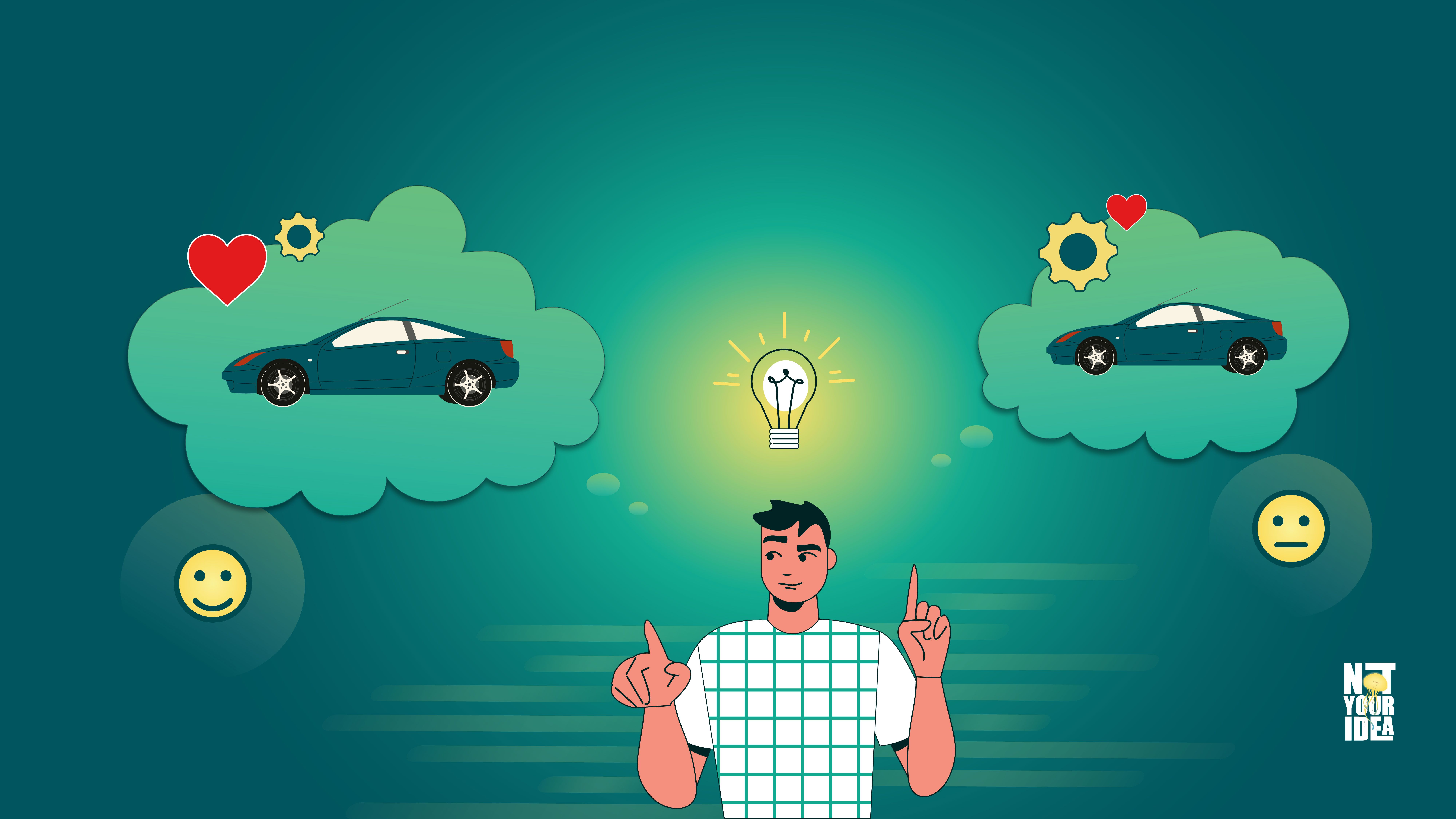
Your Brain Buys Stories, Not Specs
Even if you are selling the best product or service, you must learn to package it the right way. While selling to the audience, sell the story instead of the product. Here’s why:
The Filtering Problem
Your brain cannot process everything it encounters, so it only retains what feels relevant to survival, identity, or emotion and filters out the rest. This includes the impressive specs and features of your product.
This is one of the main reasons why feature lists fail to convert. The brain fails to register them as important in the first place. In his book, ‘Building a StoryBrand’, Donald Miller said, “people buy the product they understand fastest, not the product that’s objectively best.”
Now, a list of attributes signals the reader to do the work, but with a story, the narrative does that work for them. Plus, most of us are bombarded with promotional and commercial messages on different channels throughout the day. In this chaos, unoriginal content that smells of marketing content gets lost even before it has a chance to land.
For example, take Old Spice’s ‘The Man Your Man Could Smell Like’ ad. It hardly mentioned ingredients or the scent’s longevity. Instead, it sold a story - an absurdly confident man who could be your man with Old Spice. The ad’s goal was to increase sales by a modest 10-15%. However, the sales of Old Spice Red Zone Body Wash jumped 125% by July 2010.
The Neurological Edge
Targeted narrative content triggers ‘neural coupling’, where the listener’s brain starts mirroring the storyteller’s ideas. This kind of synchronization is hard to achieve with a standard bullet-point list but effortless with a story.
The business impact also shows up in the numbers. Narrative content gets shared at a far higher rate than promotional content. Story-led landing pages boast notably higher conversion rates than feature-led ones.
This is the main agenda behind storytelling marketing. It’s not about sounding warmer but shaping content around the fundamentals of human attention and memory.
Say a skincare brand builds two landing pages for their product. One lists ingredients such as niacinamide, hyaluronic acid, and ceramides. The other opens with a woman describing trying multiple products for her skin condition for three years before this product that finally worked.
Same product, same price point, same ‘Add to Cart’ button, but the second page keeps users scrolling more because of a convincing story. Nothing about the product changed in either page; what changed was that the reader saw themselves in the story.
The Framework That Turns Stories Into Sales
Now that you know the ‘why’ behind using compelling stories to boost your sales, let’s understand the framework that helps you get there.
Using the Hero’s Journey for Business
Every high-performing marketing story, regardless of industry, tends to follow the same beats, drawn from the ‘hero’s journey’. This is a framework presented by JJ Peterson in the StoryBrand model, which consists of:
- What the customer wants
- The problem standing in their way
- You, as the guide, not the hero
- The plan you hand them
- The ‘Call to Action’
- Success on the other side
- The failure traps to avoid
In this, the third point is where most brands and individuals go wrong. They cast themselves as heroes, and the customer feels this immediately, even if they can’t articulate why exactly the content feels off.
Maybe it’s using an opener like “we're the best in the industry” before addressing the customer’s problem. Or maybe the founder’s origin story takes centre stage instead of the product pitch. It could also be copy stuffed with ‘our’, ‘we’, and ‘us’ while the ‘you’ barely shows up.
None of these are red flags by themselves. But together, they signal a brand talking about itself more rather than interacting with the reader, and readers pick up on that fast.
When selling a story, remember, you’re always the guide and the customer carries the story.
External Problems vs. Internal Problems
External and internal problems form the basis of what distinguishes good content from content that actually converts. Here’s how -
External problems are concrete, like a broken process, a messy spreadsheet, or a website that fails to generate leads.
Internal problems, on the other hand, are how these external issues are perceived. This can be in the form of frustration, embarrassment, the quiet fear of falling behind, or the good old FOMO (fear of missing out).
People make the buying decision to solve the internal problem, which in turn fixes the external issue.
For example, in the case of a cybersecurity company, writing, “Our software blocks 99% of phishing attempts,” is accurate, but still flat. Instead, frame it like, “You’re one bad click away from being the person who explains the breach to leadership.” This brings internal stakes into the picture, which actually moves people to act.
Why This Framework is Scalable
The flexibility of this framework makes it compressible and expandable without breaking. The same seven steps can be fit into a ten-second hook or a ninety-minute keynote, with only the time spent on each step changing.
Let’s take the same cybersecurity software company example from above. Here’s the same seven-step framework, stretched into a ninety-minute keynote and compressed into a ten-second ad hook:
Framework Step | 90-Minute Keynote (highlights) | 10-Second Hook |
What the customer wants | Fifteen minutes on what “feeling secure” actually looks like for an IT lead: sleeping through the night, not dreading Monday inboxes | “You want to stop worrying about the next breach.” |
The problem standing in their way | A full case study walkthrough - how one phishing email took down a mid-size company, with screenshots and a timeline | “One bad click could take down your whole system.” |
You, as the guide, not the hero | The speaker shares their own near-miss story, then pivots to ‘here's what we built after that’ | “We've stopped 99% of these attacks before they land.” |
The plan for them | A live three-step onboarding demo for users to follow along on their laptops | “Install, scan, and sleep peacefully tonight.” |
The Call to Action | A slide with a QR code and a limited-time onboarding offer for attendees | “Start your free scan now.” |
Success on the other side | Customer testimonial videos and companies describing life after adoption | “Join those who stopped explaining breaches to leadership.” |
The failure traps to avoid | A ‘what happens if you wait’ segment with real breach cost data | “Waiting costs more than switching.” |
Same seven beats, same emotional logic. The keynote spends fifteen minutes where the hook spends three words, but neither skips a step; they just move at different speeds. That's what makes this framework genuinely scalable.
A content lead can hand this same table to a script writer, a landing page copywriter, and a keynote speaker without anyone reinventing the wheel.
Mapping the Buyer Journey: From Narratives to ‘Thank You for Your Purchase’
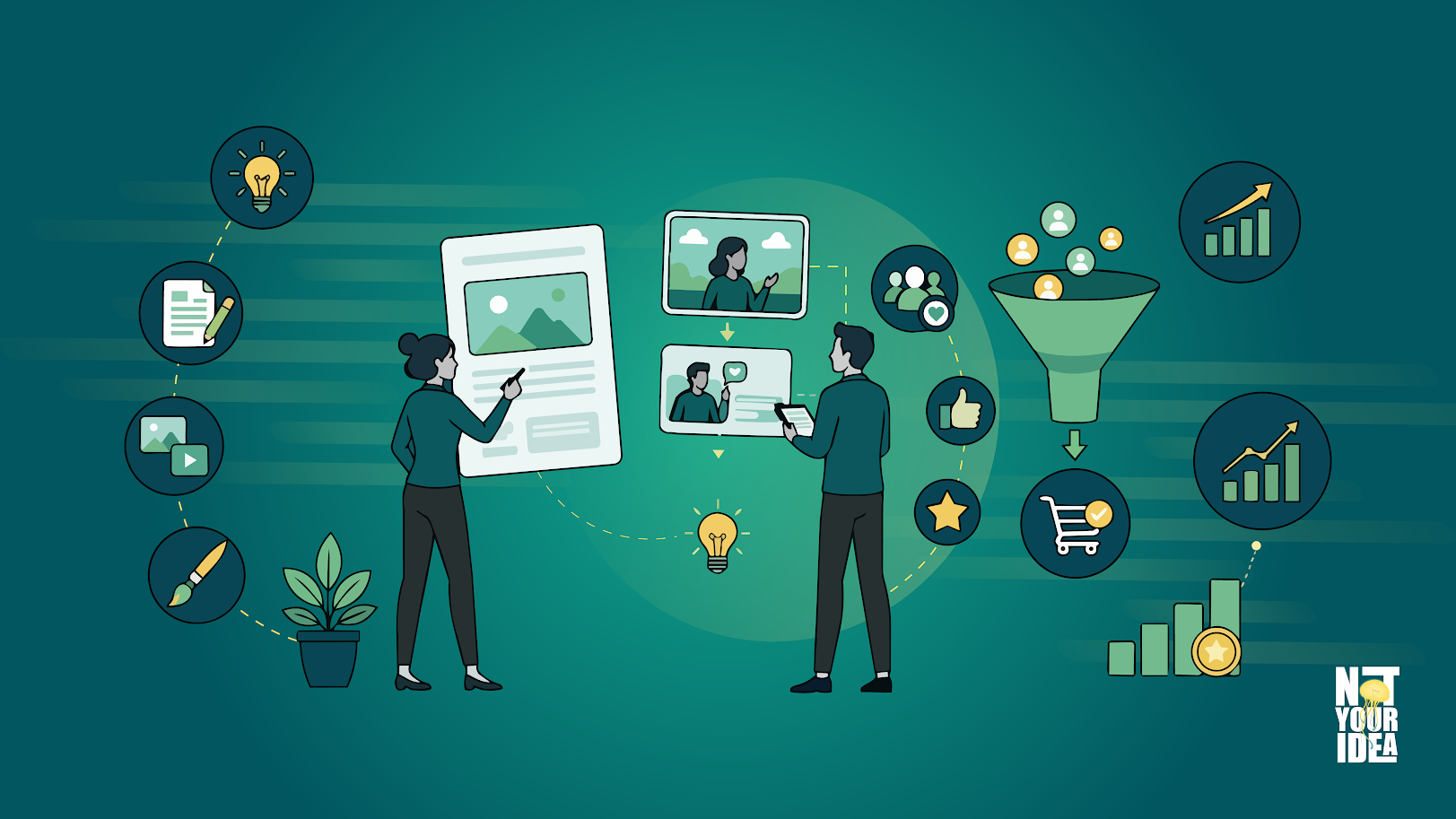
Now that you know how to tell gripping stories, it is time to make money from it. Here’s how the buying journey should flow for your readers:
Top of Funnel
At the top, your only job is to offer familiar and relatable elements to strangers. The goal is to be recognized and then sell. This is exactly where raw, less polished content tends to win.
Authentic human narratives lead to measurable conversion. This is largely because people are inherently more skeptical of fabricated brand stories than they are of other people’s stories.
Mid-Funnel
Once a prospect is watching a comparison video or a demo, they’ve already moved past curiosity and into evaluation. The content here needs to act like a wise friend who answers the actual question and knows what they are talking about.
People who watch product videos are far more likely to at least add the product to their cart. That’s friction disappearing in real time instead of increased engagement for its own sake.
Bottom of Funnel and Retention
Your story is the layer that keeps capturing intent-driven traffic while you focus on other things. It’s the part of content marketing that compounds without continuous spending and investment.
Email and other channels carry this relationship forward once the purchase is successful. This is where storytelling creates lifetime value instead of stopping at a single sale.
Basically, the seven-part structure is relevant at every one of these stages. The only element that changes is the pacing, not the form.
The Revenue Mechanics: How Content Marketing Moves Numbers
Let’s talk numbers now and see how your storytelling skills expand into larger horizons for your brand.
The Five Levers
Strong storytelling consistently pulls all five of these levers or at least a couple of them:
- Higher conversion rate: Clear and emotionally grounded content drives intent faster than a technical spec sheet.
- Lower customer acquisition cost: Brand equity built through content makes every penny spent on paid media more efficient.
- Higher lifetime value: Customers who connect with your story are likely there to stay and place repeat orders.
- Stronger brand recall: People tend to remember stories even if they forget the features your product has to offer. Like the ‘Old Spice’ ad example earlier in the blog, where the brand’s story echoed far stronger and longer than the product’s features.
- Organic reach: Content that moves someone gets shared, and every share is distribution you don’t have to pay for.
Proof at Brand Scale
YETI is one of the most apt examples of this phenomenon in action. The US brand made coolers and other outdoor products for a niche audience. However, the brand grew toward billion-dollar territory largely through narrative-driven film, rather than offering discounts or feature-forward advertising.
Even the content rarely talked about the cooler directly. Instead, it showed what happens around the cooler.
Scott Bellow, YETI’s head of content, commented on this, saying, “Content gives a brand a soul.” That soul is what allows a brand to charge more and keep customers longer. It’s not a feel-good idea. It shows up directly in margin and retention.
Where Marketing and Sales Actually Meet
This is the point at which alignment between marketing and sales becomes structural rather than aspirational. Content created using Peterson’s seven-part story framework implies that a prospect walks into a sales call already understanding the value. They’re confirming the belief that the content has already been built.
For example, if a mattress manufacturer stops pitching his own product to retail partners and instead builds content that helps retailers sell more mattresses regardless of brand. This shift leads directly to new partnerships and sales.
Generosity in content is a positioning strategy. When you help your audience win, you become the guide they trust rather than another vendor competing for shelf space.
A Practical System for Applying This
Now, for the final act, you take everything you have learned so far and implement it to fill the gap between storytelling and sales.
Anchor Content in Purpose
Don’t lead with features. Lead with the brand’s beliefs or the outcomes your product enables. This isn’t a tactic reserved for brands with big budgets. Maximizing the impact of your content comes mostly with clarity and not cash.
One Asset, Many Outputs
A single piece of long-form story-led content can be reshaped into five or six distinct assets without reshooting. For example, one customer story can become a social clip, a blog post, an email feature, a quote for your sales deck, and an ad variation.
This is a practical case for storytelling marketing regardless of the company size. Along with producing more content, you also optimally extract from what already exists.
Audit Before You Create
Before you put up any piece of content online, make sure you run it through these four essential questions:
- Does it name the internal problem, and not just the external one?
- Is the customer cast as the hero or the brand?
- Is there a direct, specific call to action?
- Are the stakes clear - the upside of acting and the cost of not acting?
If you cannot answer either one of these questions, then you likely have more homework to do before the content goes live.
To Conclude
Sales conversion is about more than just the moment a customer checks out. It’s the sum of every point in the journey where you make the customer feel understood and not just sell to them.
Once you see the seven-part structure at play behind a piece of high-performing content, you stop producing generic posts and feature-heavy pitches. You start building stories your customers can actually step into. That perspective shift is the entire difference between content that merely survives and content that performs and converts.
FAQs
Why do many brands still focus on feature-led content?
Feature lists feel safer and are easy to fact-check and approve. A story requires a unique point of view, which can be challenging. So teams default to specs because they feel objective, even though specs are exactly what the brain filters out first.
Does the seven-part framework apply in B2B, with longer buying processes and more stakeholders?
Yes, it is more effective there. Longer B2B cycles mean more internal problems. So a buyer evaluating your software has an external problem (the tool doesn’t scale). Their boss has a different internal problem (his reputation if the purchase fails). Strong B2B storytelling content speaks to both layers at once, often in the same piece.
How do you tell a customer-as-hero story authentically?
Authentic storytelling in marketing starts with naming a problem your viewer already has and offering a plan that works. If you cannot comfortably explain your messaging choices directly to the customer, you might have likely crossed from persuasion into manipulation. Honesty about the stakes is what separates the two.
How long does it take to see storytelling content affect sales numbers?
It depends on the channel. Top-of-funnel content like social posts can show engagement signals within days. Blog content, on the other hand, tends to take months to rank and compound, which is exactly why it’s more effective in the long-run. Brand-level storytelling plays out over years, not quarters.
Why do some brands with great storytelling still fail to convert?
It usually comes down to a missing call to action or a guide that never actually shows up. A story can be emotionally compelling and still miss the mark if it doesn’t end with a clear next step. In some cases, brands invest a lot of time building emotional connection but not as much time in offering the solution. Effective storytelling is about moving them emotionally and then telling them exactly what to do with that feeling.