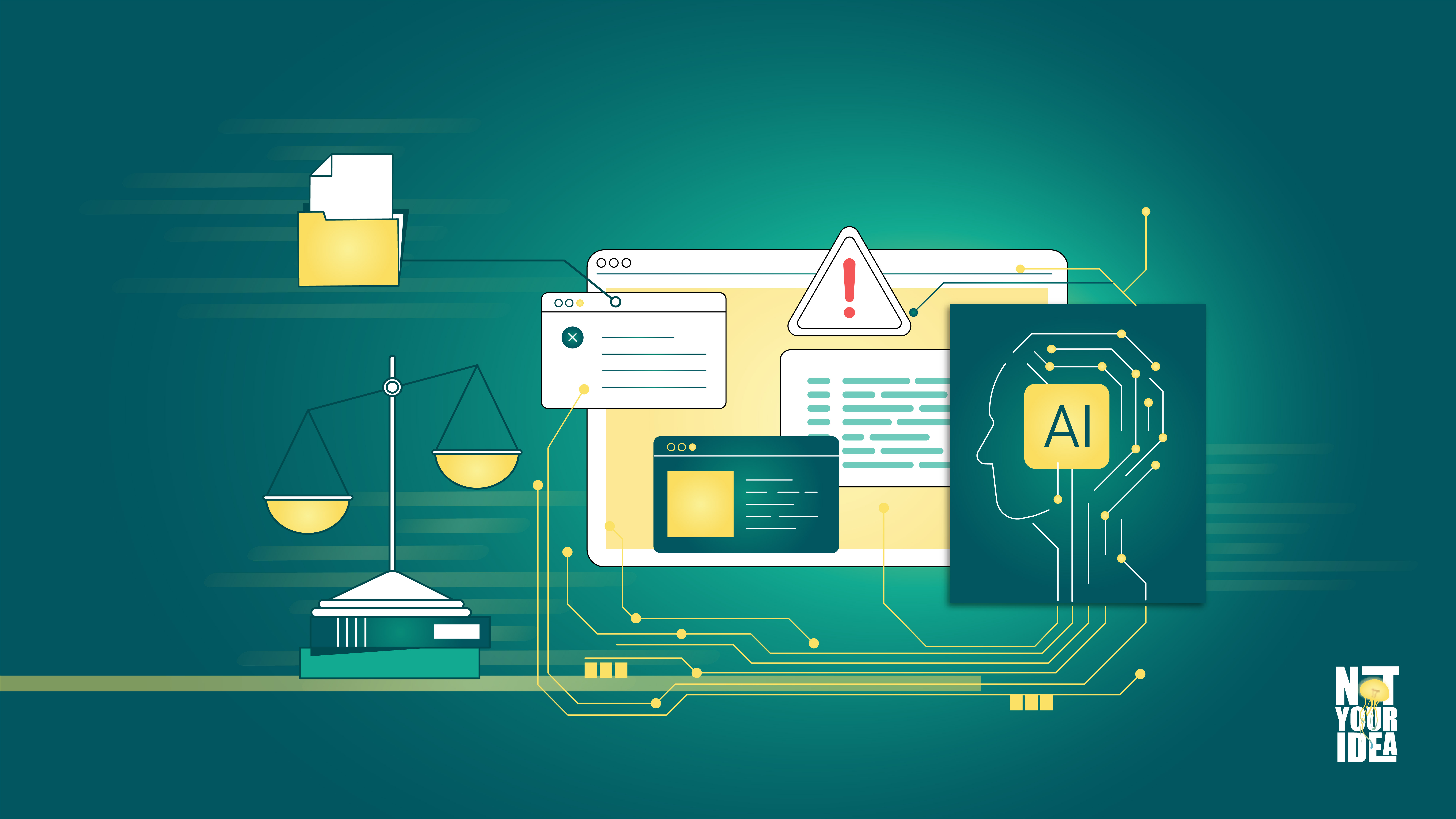
The conversation around artificial intelligence has moved beyond mere capability to urgent questions of ethics and control. As AI integrates into everything from healthcare to creative work, the absence of global governance is a growing risk. Humanity is now in a critical race between rapid innovation and necessary oversight, wherein privacy, stability, and social trust hang in the balance. This is about responsibly steering the power of AI to benefit society, not unleashing problems that cannot be solved.
What Are the Issues in AI Governance?
AI governance refers to addressing a constellation of interconnected risks that extend far beyond technical bugs. The issues are profound and human-centric. A primary concern is the proliferation of deepfakes and synthetic media, which erode public trust in information and can be used for fraud, political manipulation, and personal harm.
The fear of widespread job displacement due to automation is very real on the socioeconomic front, threatening to worsen existing inequalities if the transition is not managed carefully. Furthermore, AI systems can perpetuate and even amplify societal biases present in their training data, leading to discriminatory outcomes in hiring, lending, and law enforcement.
Why Does the World Need Better Global AI Rules?
The need for robust, international rules isn't just an academic debate; it is a practical necessity for safe and equitable development. Let’s break down the key reasons why current approaches are falling short.
- Bias and Fairness: AI is only as unbiased as the data it learns from. When that data reflects historical prejudices, so will the AI output. Without global standards that mandate rigorous bias testing and transparency in datasets, one risks automating discrimination on an international scale, with no consistent way to challenge or audit these decisions across borders.
- Lack of Strategic Vision: Many organisations, and even governments, are adopting AI in a piecemeal fashion, solving immediate problems without a long-term strategy for integration, risk management, or ethical alignment. This reactive approach leads to siloed systems, wasted resources, and unforeseen consequences that could have been mitigated with a cohesive plan from the outset.
- Lack of AI Competency: There is a massive talent gap. The people developing and deploying these systems often lack interdisciplinary training in ethics, law, and social sciences, while the policymakers regulating them may not fully grasp the technology's technical nuances. This skills divide makes effective governance incredibly difficult, as both sides struggle to communicate and collaborate effectively.
- Data Security and Privacy: AI models are hungry for data, raising enormous questions about consent, ownership, and security. A breach in an AI system is not just a leak of personal information; it could expose the proprietary training data that forms a company's core intellectual property. Global rules are needed to establish baseline security protocols and data rights, preventing a "race to the bottom" where countries with lax regulations become data havens.
Introducing the MANAV Framework: A Human-Centric Approach
New governance models are beginning to emerge. During the AI Impact Summit 2026, India introduced a framework called MANAV that provides a clear set of principles designed to ensure that artificial intelligence serves human interests ethically and effectively.
The MANAV framework is built on five key pillars, each representing a crucial aspect of responsible AI:
- Mindful: This principle stresses that AI systems should be designed with a deep awareness of their potential impact on society, culture, and individual well-being.
- Auditable: AI processes must be transparent and traceable. Organisations should be able to explain how their AI models arrive at specific conclusions or decisions.
- Neutral: The systems should be free from inherent biases that could lead to discriminatory or unfair outcomes for any group or individual.
- Augmented: The primary goal of AI should be to enhance human capabilities, not to replace them entirely, fostering a collaborative relationship between people and machines.
- Verified: AI systems and their data sources must be thoroughly checked for reliability and accuracy to ensure they function as intended without producing harmful misinformation.
The MANAV framework offers a promising path forward, ensuring that AI evolves in a way that aligns with human values, ethics, and global well-being.
Summing Up
Navigating the risks of AI is not a task for a single company, government, or academic field. It is a collective global project that demands transparency, collaboration, and a renewed commitment to putting people first. The issues of bias, job displacement, mental health, and security are too interconnected to be solved in isolation. Frameworks like MANAV show a promising path forward that measures success not just in processing power or profit, but in the positive impact on human society. The goal of better global rules is to steer this powerful technology toward a future that is innovative, equitable, and fundamentally human.
FAQs
Will There Be Job Losses Due to AI?
No, there will not be job losses due to AI, but there will be an increase in job opportunities for people in the future.
What is Privacy Violation in AI?
Privacy violation in AI refers to the infringement of the privacy on various AI platforms, and data is collected without the user's permission.
Is There an AI Skills Shortage?
Yes, there is an AI skills shortage among people who do not know how to use AI in workplaces.
When Was the Manav Framework Launched?
The MANAV framework was launched on the 19th February, 2026, at the AI Impact Summit by the Prime Minister of India, Shri Narendra Modi.